Cyclical vs. Linear Time

While looking at Native American, and the English world of early America, you will find there are several differences between their religion, and view of time. Because the two communities never intermingled before the first explorers came to their shores, they had completely different views of time and space. In fact, the two societies had no idea that the other even existed. It is common belief, that while observing the Native America we discovered, the English were looking 'back in time' to a less advanced culture. This is debatable, because the view of the Native Americans did not call for advancement, like our society does; simply because they did not view time the same way.

Native American time is cyclical - of, relating to, or characterized by cycles (dictionary.com). This means, that instead of having a single line of time, going onward and onward without any stopping (as is the belief of common day America), but that time was like a circle, or a spiral. The same events would happen over and over again, in one way or another. Time, in their sense, was stoppable. Scott Momaday once explained Cyclical time, stating

"It is an interesting concept... I don't know that anyone can explain it... I think instead of being something that passes by, it is static, and people walk through time as they might walk through a canyon, and one can pause and stand in time... It isn't something that necessarily rushes by, one can take hold of it.”
Linear time, pertaining to or represented by lines (dictionary.com) was the common belief of the Englishmen, and other Christian societies. Linear time is simply the view that time stretches onward into space; that it cannot be stopped, and one cannot see the end of it, because time is infinite.

One thing that can be contrasted is how religion played a part in the development of the view of time. The English at the time were predominantly Christian. The book of Genesis in the Bible explains this view of time well. The story in Genesis states that a man and a woman; Adam and Eve were created in a great Garden of the name of Eden. They were created to rule over the beasts and the Earth, but never to touch the fruits of the forbidden tree. Yet, human nature overpowered Adam and Eve, and they were cast out of the Garden, having upset God. God, cursed all human kind, sentencing us to work and toil for long hours to make our living in a place very different from the Garden. As well, the crucifixion and resurrection of Jesus Christ also proves that we live in a world of linear time.
“According to St Augustine of Hippo, the Universe of going along in a straight line...if time is cyclic Jesus Christ would have to be crucified again and again. There would not be, therefore, that one perfect and sufficient sacrifice, oblation and satisfaction for the sins of the whole world. Time had to be a straight line from the creation to the consummation to the last judgment.” (Alan Watts).
In Christianity there is a sense of a “fall from grace” - the being thrown out of paradise, to thrive in sin until Armageddon. Without linear time this belief is not possible.

Cyclical time for the Native Americans meant that there was no fall from grace as the Christians see it. They were simply created by a power higher than themselves. Yes, there were wrongdoings to be learned from, but there was no belief of a thing called 'sin', or anything equivalent to it. Since time is cyclical, there would be no need for forgiveness and improvement, since they did not believe they were progressing, eventually to the enlightenment, and judgment of their God over them. Their 'myths', or stories of how things have to pass were delivered orally, and not in a scripture as the Bible is. The Native American way of life did not look upon time as a force rushing past them on and on until eventually the end of their existence was terminated.

The sense of society and way of living was different between these two cultures, also. The English were people that valued improvement. Knowing that time was passing by, they strove to create new solutions, gain knowledge, build things bigger and better before... to become better people individually. They owned their own land, houses, and money. If another human wished to have something they did, they would have to buy or trade for it; it was not generously given. Each generation was expected to do better than the last. Knowing that with each passing year knowledge was to be gained raised the bar for ever new generation. Learn more than the next, and you will acquire more money, and more knowledge, and then pass that on to your children.

Native Americans did not think so selfishly: they shared their food and land as form of commonwealth; 'this is not anyone's land, it is everyone's land.' They did not have such a strong from of individuality, but a sense of community. They lived and thrived off the land, thus being incredibly close to nature and its animals. They believed that all animals were on the same level as themselves, and to disrespect a creature was a bad thing to do, and
would upset the gods. A French missionary once described the behavior of the Innu tribe : “the Savages do not throw to the dogs bones of female Beavers and Porcupines, - at least, certain specified bones, in short, they are very careful that the dogs do not eat any bones of birds and of other animals which are taken in the net, otherwise they will take no more except with incomparable difficulties ... it is remarkable how they gather and collect these bones, and preserve them with so much care, that you would say their game would be lost if they violated their superstitions.”


The English Christians view of time affected them so that they strove to excel; to gain more knowledge and wealth. They believed in time as a straight line which would continue onward forever. The Native American view of cyclical time created an environment of a close community, dwelling with and around the earth and creatures. They believed they did not need to change or improve their way of living, because life was a cycle, and this was the way they would be, forever onward. These two societies are more different than they are the same, yet they are both brought together through religion.

Essay Question

Compare and contrast cyclical and linear time, and describe the way of life each view brings.

Local Maine History Paper; Clifford Dairy Farm

Outline

I. Introduction

a. early life

II. Farm Life

a. beginning of the farm

b. livestock, machinery, and chores

c. the process of dairy farming

d. family stories

III. Conclusion

a. bibliography


Through the years, Dairy Farming has always been a difficult and labor intensive career. The number of active Dairy Farms in Maine is dwindling, and it is important to save the legacy of the farms from the past. Here is the story of the Clifford Dairy Farm.


I asked my mother, Betty Wright to tell me about my ancestors, since I know so little about them. It was amazing what she told me.


My grandmother’s full name is Mildred Lydia Nurmi Clifford, usually called Mildred or Millie by her friends. She was born on May 21, 1923 and was raised at 50 Roosevelt Street, Innwood Long Island, New York. There were four children: Helen (a half-sister from Axel's – her father’s first marriage), Lauri (pronounced loud-ie), Grammy and Paavo, her youngest brother. All are of Finnish descent. Mildred’s mother’s name was Lydia Nurmi. As a first generation immigrant, Mummu (which means grandmother in Finnish) arrived from Finland on a boat to be a housekeeper, thereby paying for her passage. She married Axel Nurmi, my great-grandfather, a carpenter by trade.


Mildred grew up in a place named Innwood, a suburb of New York City. She attended Public School number two in Innwood for grades Kindergarten through grade seven; Lawrence for eighth grade and a new Lawrence High School for grades 9 through 12. From September to November of 1941 she attended Browne's Business School in Jamaica, Long Island, taking secretarial classes. From 1944 to 1947 she attended Providence Bible School in Rhode Island.


A
fter she finished those classes in 1941, she kept books for a dentist named Dr. Pinto during the summer. She then ended up with more responsibility than handling receipts, however; she also mixed amalgam (an alloy of mercury with another metal or metals) and acted as assistant to Dr. Pinto also. On December 29, 1941, she began commuting by train to the City to work for Wilson Fastener Company. On May 20, 1942, she started working for Piquot Mills, which took her to the 29th floor of the Empire State Building every day. This is back when New York was at its Golden Age.


Her Bible school training changed the direction of her life; in the summer of 1947 she took summer Bible School in Stowe, New Hampshire. She learned to drive and accepted a job in 1947 as a rural Bible Schoolteacher in Maine, traveling to the local one- room schoolhouses (Unity, Troy, Dixmont among them) to teach children their Bible stories. As a result of her life as a farmer's wife and mother of five children, Mildred learned to cook and bake, sew and can garden vegetables. She loves to play the piano (since girlhood) and sing in the choir. At her college recital she played Liebestraum, which she learned by heart and continued to play for her children, a beautiful and moving piece composed by Franz Liszt. All of her life she has maintained a Christian outlook. All of her life, she has never lost her temper, spare only once, and that was a long time ago.


My Grandfather’s name is Charles Lovell Clifford, born June 17, 1923 at Greene's Corner in Troy, Maine. Troy has been his home all of his life, though his family moved from Greene's corner to Roger's Corner and after he and my Grandmother were married, they lived on Barker Hill Road and then on Troy Center Road where they remain to this day. Known as Charlie, he had an older brother James Oscar Junior, who died early in life from tuberculosis; another older brother Stanley Lewis, who was killed by a robber attempting to hold up the gas station which Stanley managed in Florida, and a younger sister, Dora Letha, who lives in Monroe, Maine with her family.


Charles went to school in one of the five one-room schoolhouses in Troy; he attended Greene's Corner Elementary for grades one through eight (no kindergarten was offered). Grades nine through twelve took him all the way into the next town, to Unity High School (where Betty eventually went to Junior High). After high school, Charles worked on road crews for the Maine State Highway Commission but quickly decided that this was definitely not the life for him. Bosses who sat around all day while the workers worked like crazy just didn't seem right and was not tolerated for very long.


On October 12, 1947, Columbus weekend, fate struck. Mildred was staying with Betty and Tom Hawkswell while teaching Bible school; she attended a funeral for a friend, Bill Barnes, who lived across from Josey Rogers (and across the street from Charles’s parents). Who else should attend the funeral but Charles himself, which is how these two met. Later, on January 30, 1948, it was thirty below zero and Mildred’s gas line froze on her car, leaving her stranded. Charles came to get her and she ended up staying over at Charles’s parent's house. Well, on April 8, 1948, Mildred got her engagement ring and they were married June 5, 1948 at the Burnham Baptist Church, chosen because of its center aisle since both Mildred and Charles are Protestant.
Charles and Mildred started their life together on a small farm on Barker Hill Road in East Troy. They had one cow, a few sheep and a pretty little cocker spaniel named Goldie - no electricity or indoor plumbing. Their firstborn, Paul Lovell, arrived on May day 1949, followed by James Lawrence (April 3, 1950), then Nancy Lydia (July 16, 1951), my mother, Betty Lynda (December 9, 1955) and Stephen Lee (July 28, 1960). The summer of 1955 took the family from their farm in East Troy to a larger one on Troy Center Road, actually three old farms, now combined into one. The two story farmhouse, attached timber frame horse stable and dairy barn
were where Betty was born and raised. The one herd dairy cow farm begun in 1948 became a two hundred head farm with the help of five strong children. Charles worked very hard over the years, raising the animals and crops, such as wheat, hay, and corn for the animals. They always had a big garden to help feed the family and a few apple trees scattered around the farm for fall picking. Charles loved the outdoors and through necessity, became a skilled mechanic, carpenter, plumber, electrician, herdsman, veterinarian, and any other trade required to keep the farm and home. He always loved horses and has a good eye for horses; before the use of tractors he kept teams for running the farm and pulling out pulp from the woods during the winter months. They had several ponies, beginning with the old black and white pony Tony. Charles also loved family picnics and country music. He always held the attitude that it was best to buy the best, then treat it well and make it last as long as possible. This philosophy stood him well and was passed on to his children - good advice and a good way to live. Charles always administered the discipline in the family, and a sound spanking was in order a few times, usually as a result of some dangerous action that had to be nipped in the bud, but occasionally for something that got his goat, like not getting up in the morning when the work was waiting or being just as hard-headed as he was. Being opinionated and stubborn probably held Charles Clifford in good stead through a lot of hard times.


While talking to my grandfather, Charles L Clifford, he reminisced about all the machinery and chores that had to be done while his farm was still up and running. Sometimes, he didn’t have much to say, but he really is a highly opinionated man.

He claims that in the highest days of his farm, he owned around one hundred – seventy or so Holstein mixed with Jersey dairy cows. As well as this, he owned chickens, geese, pigs, and a small pony for his daughters Nancy and Betty to ride. Betty recalls that she owned three while she lived on the farm, one named Star, one Tony, and one Bobby.

As for the equipment he owned, he is sure that he must have owned at least two large tractors, a hay rake, a bailer, a manure spreader, and an old farm truck.

Larger animals, such as pigs and dairy cows were considered the men’s job. Charles, Jim, Paul, and sometimes Steve (if he was old enough at the time) would go out into the fields at first daybreak and begin their loading of bails onto the truck. This of course was extremely hot, sweaty work, and under no circumstance was a women asked to do this job. Betty wanted to come along, and even if she was allowed, she had to sit inside the truck and listen to the radio. Her older sister, Nancy was usually off doing her own thing, and her mother Mildred usually occupied her time with reading hymns and praying.

In the morning, around four o’clock or earlier, the boys would be woken up to milk the cows, before every school day. If they didn’t have to go to school, they would be set to work doing other various chores, such as the pig sty, or bailing hay, if need be. Milking cows in the bitter cold is a very tedious job, day after day, in the pitch black of the morning.

The smaller jobs were left to the women. Such as tending to the chickens and picking the vegetables from the garden. House cleaning was also viewed as a ‘woman’s job’, so Mildred spent most of her time inside.

Dairy farming today is very different then the way that it was done on the Clifford farm. The actual obtaining of the milk is not a very difficult process; however keeping your livestock alive and healthy is a costly and tiring job. Out of the one hundred and seventy cows they did own, only one hundred were mature and milk producing. A healthy cow will produce somewhere around six to seven gallons of milk each day. That’s seven hundred gallons of milk every day, which needs to be pumped, refrigerated and shipped off to market. Imagine waking up before the sun even rose to pump with your hands seven hundred gallons of milk.

After the boys had woken up, they would (most likely) dawn their coats and jackets and head off to the barn, where the cows would be tied up by their necks in separate milking stalls. The milk is withdrawn from the udder using a pulling and squeezing motion. Once the milk is acquired, it must be refrigerated. It could be put in a “milk tank”, where the milk is continuously cooled by a doubled walled system, where cooling coils fill the space above and around the milk.

Farm Life, family stories.

Over the years my mother, Betty has told me many stories of growing up on the farm with her brothers and sister. Some of them are quite funny, while others are unnerving. However, these are stories, which if not written down, will vanish over time. Some of these stories, the participants may not want to be told; (you’ll see what I mean once I tell you). Anyway, here is the first story that comes to mind.

“the Apple Tree”

It was fall, and my mother was a young girl. She and her older brothers Jim and Paul decided to go out into the field and pick some apples, although this was a difficult task since the apples were up high and hard to reach. So, they took their pony along with them, and walked out to the apple tree. Once they go there, Jim and Paul climbed their way up into the tree and began shaking the branches, trying to get the apples to fall. My mother was standing beneath the tree, next to her pony. Unexpectedly, an apple fell onto Bobby’s (the pony’s) hind quarter’s and startled her, sending her running through the manure – covered pasture. My mother, startled as well became tangled on the cart which the pony had carried. Bobby didn’t mind of course, and galloped across the field, thoroughly drenching her in mud and manure. She recalled that later, her father Charles had taken her into the shed and sprayed her down with ice cold water from the hose.


“the Fire”

Betty was in her college years, and had been gone off to school, away from the farm. Her brothers, Jim, Paul, and Steve were out working in the fields. When they returned one afternoon to their farm house, it was ablaze. They could save nothing from it. Later, they built another farmhouse nearby, but by that time most of Charles’s and Mildred’s children had already gone off and started lives of their own.


“the Blueberry Jar”


The names in this story are to be untold, since disclosing them may lead to embarrassment. Well, the story goes like this. Mildred, my grandmother had a bunch of jars of canned blueberries. It was mid-winter, and the boys (I won’t say which ones) were hankering for from fresh fruit. Of course, being young boys as they were, had a clever idea. They snuck down into the cellar were the blueberries sat, and opened a jar. After eating the entire jar of berries, they began to panic. What would they do with the jar? If Charles found out, they would get a spanking. So they schemed, and came up with yet another clever idea. They both needed to use the bathroom. What if they went in the jar, and passed it off for kerosene? After slipping the jar amongst the other kerosene jars, they snuck up the stairs. Later that day, Charles came downstairs to light a fire. Taking the jar, he opened it, to discover it had a peculiar odor. Knowing very well what had happened, and that it was not, in fact kerosene, he went upstairs and gave the boys a proper punishment.
A Summation; Midterm

When looking back upon everything studied this unit, every piece seems to fit together flawlessly, however, it is another task to take it into one’s own hands and try to explain this in an essay. The quote given at the end of chapter twenty-nine in the Wealth and Poverty of Nations (by David Landes), “cultivate a skeptical faith, avoid dogma, listen and watch well, try to clarify and define ends, the better to chose means”, means simply this: Be skeptical, avoid a clear set of rules of what is right and what is wrong, and use this to try to find the truth, because this is wherein the real wealth lies.

When observing the flattening world around us, the world such as Thomas Friedman explained it to be in his book the World is Flat, truth and honesty is a very important virtue. For one, our society is highly based on a system called the cash nexus, an ideology where people only communicate for one reason: money. Their dealings are simply business based; they would never have met unless on business or money occasions. In this situation, trust and virtuosity are important traits. One must trust the person he or she is dealing with, or they will simply not make a deal at all. As well as this, humans have been searching for the truth since the beginning of time; even more so since the dawn of the humanist era. The basis of thought of humanists is belief that inquiry is more important than rules, that humans should view themselves as individuals, not just as one statistic amongst thousands following the same rules, just as blindly as everyone else. This caused them to yearn to find out more about themselves, thus, the search for truth. Humans today are mostly humanists. We are individualists; our Flat World proves this. A poor person born in a country other than a superpower can still input his or her ideas into the World, still be a part of the workforce, even if they are not physically there. One person is able to make a large difference, with or without money. That is the power of the Flat World, that is the power of individualism, and that is the power for the search for truth in oneself. (1, Medici Money)

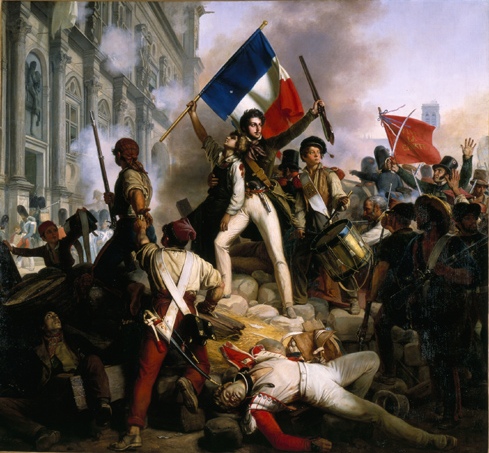
The search for truth has passed along all through the ages, from the great philosopher Socrates, to the astronomers of the Renaissance, to the humanists, to the revolutionaries in the French revolution, to the mechanics and craftsmen working in the Industrial revolution, to now; our Flattening World. In some way, humans have been searching for the truth, not only in the world around them, but in themselves as well. There is no way to discover more unless you ponder what you already know, and look forward. If you deny that you are wrong, or could possibly be wrong, then you will never learn.

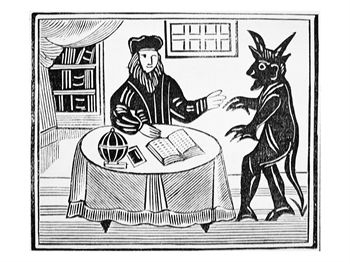
To make this point even clearer, take Dr Faustus for example. This was a man who had everything he needed. He had money, a home, and most of all intelligence and knowledge. But having gained knowledge, he wanted more. Faustus was a humanist, and being curious as he was in the world he was hungry to learn as much as possible, and improve himself as an individual. Thinking nothing of the consequences, he sold himself to Lucifer, only to revoke his oath once the damage was already done.

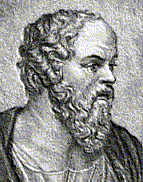
"The unexamined life is not worth living," Socrates


What Socrates was trying to state is that you must examine every bit of your life. Any preconceptions you may have about your existence may be false. Do not accept things for the way they are, question everything, do not be taken for a fool. If we as humans did not question why, then we would never have learned. If we did not look up into the sky, and wonder why and what those bright shining lights were, we would have never invented the telescope, would have never seen the things we have seen, would have never sent a man to the moon, and never have any further ambitions. You must questions your life, yourself, and everything around it to learn more about yourself. The people of every time period, from Rome, to the Renaissance, to the Industrial Revolution, to the Flattening of the World, they all are inspecting things more closely, each time more discoveries are made. Yet it is not good to be too sure of oneself, like Dr Faustus, or you may end up in deep anxiety. To learn more, you must question everything. Socrates once stated, that

Dogma can never truly be avoided; however, the entire humanist revolution came to be because of the Dogma from the Catholic Church. They wanted to be individuals; they did not want to be drones, wandering through life thinking of nothing but God in Heaven, and the Devil in Hell.

It is partially a good thing, but partially not. It is not good to have boundaries to limit your thinking, but also without those boundaries, one would never know what they were missing and may not ever think to look beyond without the extra push to revolt.

Again, what has been learned is that being skeptical is a good thing – questioning your life is the only way to move forward and attain truth. Finding the truth and a sense of individuality has been an important aspect in the way of life through the ages. Yes, we must always keep trying to improve, to learn, and to be better people. It is simply not in human nature to accept that things are the way they are, and there is no way to improve them.

Revolution

It is debatable which aspect of PERSIA most influenced the revolution of the 1400's, however there is no better way to fully describe every point of this reformation in history without this acronym; PERSIA, or politics, economics, religion, society, intellect, and aesthetics. Revolution is well defined as “an overthrow or repudiation and the thorough replacement of an established government or political system by the people governed.” Although sometimes stated as a uniform set of years, revolution does not happen all at one time, and certainly does not happen quickly. At first, it begins with discord and unease in the people. This may just be one voice speaking out, dislodging the rock that begins the avalanche, or this may be the result of many voices scheming and conversing together. It is clear by the actions of the people of Florentine, though, that when they feel sometimes in their society is unjust, they will fight for what they believe is right, and this inevitably caused a revolution.

One of the major factors that brought about the Renaissance Revolution was the eruption of Humanists. Humanists essentially were against the Catholic Church of the time, because of their belief that every day was worth living and the human soul and mind should be studied. They believed that people as individuals were extremely important, hence the name Humanist, whereas the Church believed that (or as the Humanists saw it) one should live life devoted completely to God and not delve into the meaning of one's own life. You lived to serve God, and should therefore be perpetually afraid of damnation. Humanists brought about the Revolution because they saw things in a whole new light. They brought new conversations to the people of Rome, they were able to break the mold and let the citizens wonder and question their society. For once there was a driving force questioning the all-powerful Church, when before every last being of Rome had bowed down before it.

Also associated with the Church, the though that one could pay off sins with money was accepted. This, however, was only a tool for the wealthy. The idea was this; donate a sum of money to the Pope, and your sins will be rebuked, you will no longer have to suffer the wrath of Hell. The Humanists hated this, saying that it is wrong ( a sin, even ) to attempt to pay off sins to get into Heaven, and it is an impossible feat, which will only get your closer to Hell. The power hungry Church would never say such a thing, for it was trying its best to maintain power (power equals money) in this time of crisis. This is a very discriminating tendency the Church has, and if the nobles by way of coin can redeem themselves, then the poor cannot, this will only cause displeasure in the community, which will lead to the Revolution of the Renaissance.

Another aspect that certainly aided the revolution is the banking and the money the citizens possessed. If you were a poor plebeian, you were only allowed to deal in less expensive coins. It was the way it had always been, and it was the way it was always supposed to be. If you were a patrician, you could deal in florens, which were worth far more than any plebe would ever dream of owning. The merchant trade was extremely lucrative, and as the business grew larger and more prosperous, the dissolute merchants soon became more opulent than the nobles. This enraged them, seeing that they could not climb the hierarchal ladder and become a noble, yet they could own more money, wear better clothing, have a better estate, while the nobles themselves were forced to commit usury, a sin itself to maintain even a semblance of wealth. This infuriated the citizens, causing them to revolt. They wanted justice, but they also wanted to be rich. Usury was a major issue as well, concerning the fact that the new society without so much association with the Church might allow such a thing, but the mix with the old society condemned it as a sin. The bankers used usury to keep up their wages, and this was a very good thing for them. It is clear why they would embrace the Revolution.

It is clear now how all the aspects of PERSIA work together to create a Revolution.

Humanism vs. the Flat World

What is Humanism? It is the belief that inquiry is more important than rules, that humans should view themselves as individuals, not as a large mass hurtling towards one destination or the other (ultimately Heaven or Hell.) It is the belief that humans should count every day as important, and live as though it were about to end the next, not by means of indulgence, but by looking deeper into the meaning of things.

There are a few similarities and differences between Renaissance Humanism and the Flat World of today and the future. Before this new revolution and way of thinking, people were totally and completely focused on the Church. Will I sin today? Will I be forgiven? Will I be sent to Hell? Constantly worrying about sinning, God, and their Religion, obeying every rule the Church set out for them and not even stopping to think for themselves for a moment. Then, around 1400, came the Humanists. They had a new way of thinking... they were able to outsmart, and outdo the priests. Why? Because they were willing to look beyond things, and not just accept them for the way they are commonly believed to be so. This is similar to what we are seeing today in our economy; in our 'Flat World'. People born thirty years ago are completely blown away by what is happening. To the newest generation, things do not seem too strange; we grew up with computers, with the Internet, with mp3 players and high definition television. We are the Humanists of our society, introducing a new idea, which some may or may not wish to entertain, but eventually it will be accepted globally. What the Flat World is introducing to us, is the idea that anyone with the IQ can gain knowledge, anyone with the knowledge (with just an Internet connection) can go on to do great things. They can be connected with the rest of the globe, and as an individual, work, and achieve, just like anyone else would be able to. This is similar to Humanism, because it is both resting on the point that individuality is a good thing.

Considering this, Humanism and the Flat World can also be contrasted. As written earlier, the people of the Renaissance were extremely connected to their Church. They lived their lives to get to Heaven, and first and foremost considered themselves to be Christians. This is both similar and different to our situation, because our separation is between our Country and our people. To explain further, complete this sentence "I am a(n)..." did you think of your country? In a Flat World, it will not matter what color your skin is, it will not matter what language you speak, it will not matter what country you live in, or what gender you are of. In a Flat World, it is completely about individuals interacting. This is both like and dislike Humanism. It is dislike the Renaissance Humanism because we are separating ourselves from our title of American, yet we need the principle of Humanism to do so.

Humanism, if you think about it is essential to the Flat World. Without it the way our society runs would be completely strict and overpowering. The only knowledge we would learn would be what our parents, and grandparents learned before us, and we would only do what they deemed acceptable for us to do. Without Humanism, our society would not exist.


The Once and Future King : T H White

As I read through this book, I was thinking about the these questions: were people generally evil, or good, what was humankind capable of, and what relevance does the book still have? I started listing some things that I thought were relevant, and could help me prove my point.

Good or Evil:

  • Dark magic.
  • White magic (Merlyn).
  • Adultery/lying/cheating/stealing/jealousy.
  • Enjoyment of causing others pain?
  • Chivalry.
  • Love, friendship.

Capabilities:

  • Magic.
  • Love.
  • Courage.
  • Imagination.

Relevance:

  • Kay is a trouble maker but is favored over Wart (Kay is Sir Ector's Son).
  • Ghost stories.
  • Love.
  • Adultery.
  • Growing to adulthood.
  • Peace (Lyo-lyok).
  • Belief in magic?
  • Heroes.
  • Loss of friendship.
  • War.

Impressions:

  • Use of words and way of speaking.
  • Tales of courage never go out of fashion.

Good Or Evil?

Dark magic shows up a lot in this book, from the beginning when Merlyn is suspected of being a dark sorcerer, to Morgan le Faye, the evil faerie that haunts Robin Woods's forest. You could also consider lying, cheating, stealing and jealousy to be another kind of Dark magic that takes place in this book. Lancelot, Arthur's best friends and trusted knight became very jealous of his queen, Guenever. They had an affair together, breaking the trust and friendship between Arthur and Lancelot.
Knights in this book also seem to enjoy causing each other pain. Whether it's jousting, or battling to the death, they just seem to like shedding blood... and it makes me wonder.

What magic, chivalry, friendship and love are some of the things that counteract the evil in this book. Just like Art and Kay were good friends since childhood, Mariam and Robin were lovers, and Merlyn and Nimue were as well. Merlyn cast white magic to help stem the flow of darkness, and help train his beloved Art to be King.

Capabilities:

Even though the scientific and engineering capabilities of the medieval people were not anywhere near as advanced as they are today, they had something: belief. They believed in magic, that magic could build castles of food, in fairies, in questing beasts, and phoenixes. They also had courage, and friendship, which in my opinion is far better than any technological capability we have today.

Relevance:


Kay is favored over Wart because he is royalty. I think there are a lot of people who have experienced at least something like this in their lives, even if its not because they are not the son of a Sir.

If you turn on the tv at night, or go to the movie store, you're bound to see movies with ghosts in them. People just enjoy wondering whether ghosts are real. Its the question, "what happens to you when you die?" that has haunted people from the beginning of time.

Love is ageless, and is a human emotion everyone is bound to feel at least once in their lifetime. In this book, love helps bind people together, and it also breaks apart friendships.

Every person on this earth has been a child, and in the first part of this novel, Malory lets Art and Kay experience the changing from a boy to a man.

America has experienced several wars - including the one our youth is growing up with now, the War on Terror. Boys graduate from high-school, to go on to basic training, and then are deployed off to war to serve their countries. Some of them die, leaving behind, family, friends, and loved ones. Others come back with horrible stores, and are changed for life. War and fighting is an ageless problem. The solution to War has never been solved; only dreamt of. I think, that as long as we are humans and posses human nature (greed, hate) that there will always be war. Lyo-lyok's world is beyond greed and hate; what is hers is everyone else's.

Even though belief in magic is no where near as strong as it used to be during medieval times, there are still people that believe in magic and consider it to be real. There are fortune tellers, and magicians. People also consider emotions such as love to be a kind of magic.

Whether it's Spiderman or Superman, Harriet Tubman, or Joe DiMaggio, America, and the world loves heroes. They make us believe that we can do the impossible, or make us happy when we're down, and give us hope when we have none. Heroes, whether they're from two thousand years ago, to modern times are ageless.

I think everyone has experienced losing a friend, and can connect to Arthur, whether it be to lies, disagreement, or time.

Impressions:


The way the characters speak in this book is rather odd, like the way they say 'edducation', instead of 'education'. Or is that just because Sir Ector is drinking at the time? Anyway, you can tell that the novel has been written quite a long time ago by the way sentences are worded.
For example, I was reading about when Art is sent off by Merlyn to visit the Badger. He had this conversation, which struck me as odd.

"Come out of that, thou tramp, prepare to meet thy doom."
"Measter Brock," implored the unfortunate pig, "come now, doan't 'ee be okkerd, sweet Measter Brock, my duck. Hearken to an urchin's prayer! Grant the dear boon of life to this mosst uncommon tiggy, lordly measter, and she shall sing to thee in numbers sweet or teach 'ee how to suck cow's milk in the pearly dew."

~

"Stop singing," said the Wart, "for Heaven's sake. Un-curl. I won't do you any harm. Come, you silly little urchin, and tell me where you learned these songs."
"Uncurl is one word," answered the porpentine tremblingly - it did not feel in the least fretful at the moment - "but curling up is still another! If 'ee was to see my liddle naked nose, measter, at this dispicuous moment, 'ee might feel a twitching in thy white toothsomes;"


I just find it curious and funny because the way we would have said it is "No way, I'm not coming out... you'd just eat me!"